
What I Found When I Started Doing Opposition Research: The Delaney Family Business
What a $150 million household, a bank under federal scrutiny, a subprime mortgage acquisition, and a tight web of Potomac insiders tell us about who actually owns Maryland’s 6th District.

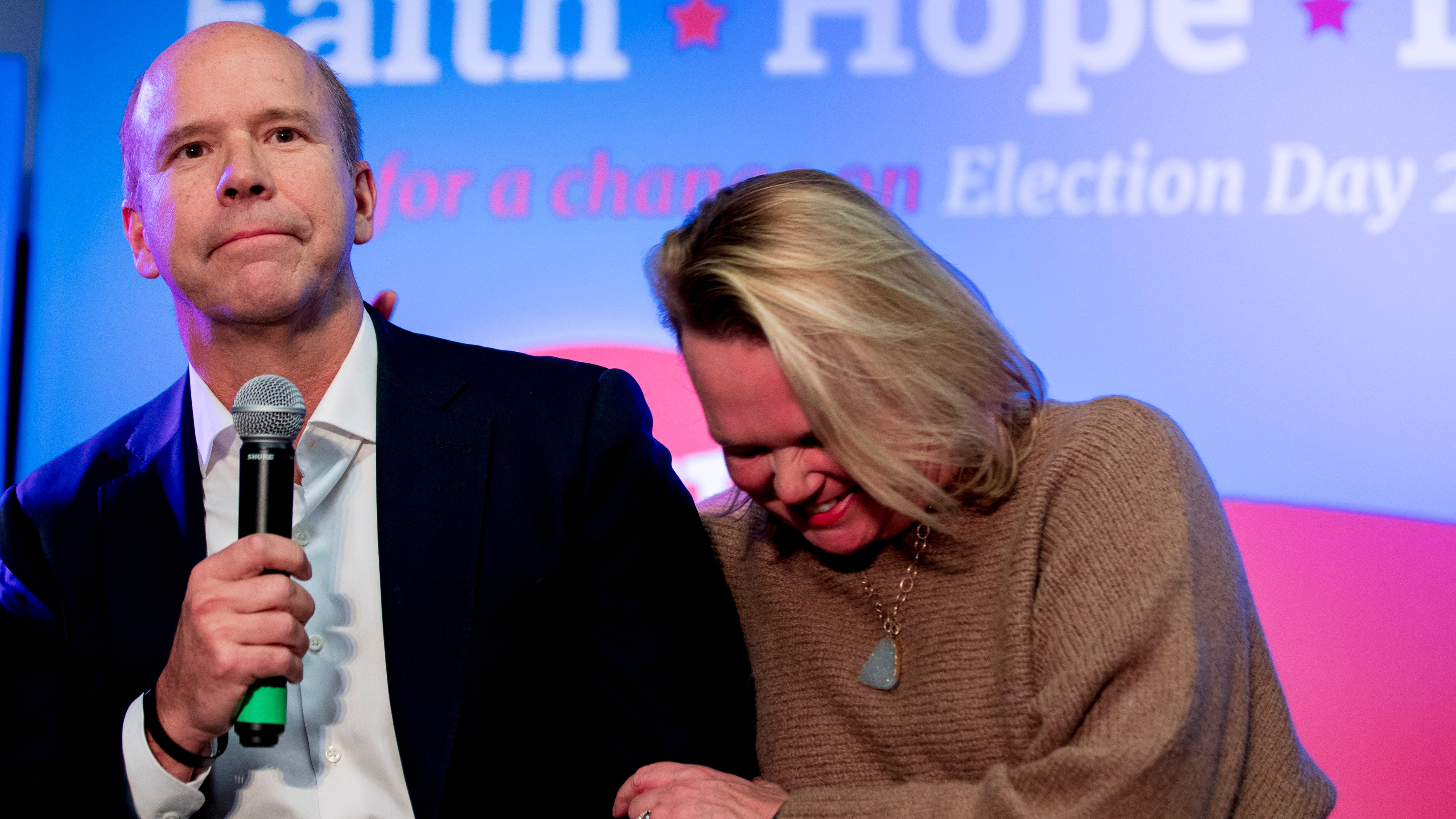
I started this as opposition research. That’s the honest truth.
I’m running a primary campaign against a sitting incumbent, and a baseline expectation of that work is knowing who you’re running against — their record, their votes, their donor base, the places where their rhetoric doesn’t match their math. It’s standard campaign homework for anyone running for office.
What I expected to find was the usual stuff. PAC donations that didn’t match public positions. A vote or two that cut against the district. Maybe some awkward statements from earlier in her career.
What I actually found kept getting bigger every time I pulled a thread.
A financial disclosure led to a bank. The bank led to a 2024 FDIC consent order. The consent order led to a $345 million capital raise. The capital raise led to BlackRock, which led to an active greenwashing complaint in France. The husband’s business history led to a June 2008 acquisition of one of the five largest subprime mortgage lenders in the country. The nonprofit she ran for almost two decades led to a funder list that reads like the founding families of the tech companies she now says she’s fighting. The brother of one of the husband’s bank investors turned out to have founded that same nonprofit.
At some point it stopped being a memo. It became a map.
I’m running for Congress in Maryland’s 6th because I believe representation should mean something. That the person sent to Washington should owe their seat to the people who sent them, not to a bank, a billionaire network, or the family they married into. I started out looking for the usual weaknesses in an opponent’s record. What I ended up with is something more structural — a case study in how a particular kind of political dynasty assembles itself in modern America, and what it costs a district like ours to accept one.
Before I tell you where that line of thinking took me, I want to show you the paper trail. All of what follows is in public filings — FEC reports, House financial disclosures, SEC documents, FDIC consent orders, and reporting from the Baltimore Sun, American Banker, Bloomberg, and Fortune.
I’m not alleging anything. I’m reading what’s already on the record.
The incumbent representing MD-06, April McClain Delaney, is by one credible estimate the 12th wealthiest member of the entire United States Congress, with a household net worth of roughly $152.8 million (Quiver Quantitative, April 2026). The Baltimore Sun has described her as the wealthiest member of the Maryland delegation — wealthier than Van Hollen, wealthier than Raskin, wealthier than everyone else Maryland sends to DC.
That wealth is almost entirely her husband’s. John Delaney is the founder and Executive Chairman of Forbright Bank, and the Chairman and CEO of its holding company. On April’s own 2024 financial disclosure, Forbright stock is valued at $25 million to $50 million. Three additional joint investments are each worth $5 million to $25 million.
That’s not a disclosure. That’s a diagram of a conflict of interest.
1. The Bank
Forbright Bank, headquartered in Chevy Chase, holds approximately $7.3 billion in assets. It calls itself a climate bank. Half of its portfolio is earmarked for financing decarbonization. It signed the UN Principles for Responsible Banking. It made John a hero at Citizens' Climate Lobby. Good PR, clean branding.
Here’s what the branding leaves out.
Forbright's institutional backers are BlackRock, Centerbridge Partners, Gallatin Point Capital, Bayview Asset Management, and Tom Steyer's Galvanize Climate Solutions. That was the $345 million capital raise in 2021 that funded the rebrand from the old Congressional Bank.
BlackRock is the largest asset manager in the world.
In 2020, Larry Fink promised that sustainability would be BlackRock’s “new standard for investing.” By 2025, BlackRock had quietly withdrawn from the Net Zero Asset Managers initiative, scaled back Climate Action 100+, stopped using the term ESG, and got itself removed from Texas’s oil-boycott list by demonstrating a “real commitment” to fossil fuels. In the first quarter of 2025 alone, BlackRock pumped $3 billion into fossil-fuel companies through funds it still labels “sustainable.”
It is the subject of an active greenwashing complaint by ClientEarth in France.
The anchor investor in Maryland’s premier “climate bank” just publicly quit the climate movement. That is the regulatory and reputational reality underneath the green marketing.
Now look at how the bank has actually operated under John Delaney.
In July 2024, the Federal Deposit Insurance Corporation issued a consent order against Forbright over the reliability of its deposits. At its peak in late 2022, more than 60% of Forbright’s deposits were “brokered” — hot money that chases yield and flees at the first sign of trouble. Regulators capped the bank’s growth at 10% per year until it cleaned up its funding mix. The order was resolved in mid-2025. During the same examination cycle, federal examiners also flagged flood-insurance compliance failures stemming from a 2022 exam.
So the record, as of today, reads like this: a $7 billion bank with a climate-PR layer and fossil-fuel-funding anchor investors, operating under the shadow of a recent federal consent order, owned in part by a sitting member of Congress whose household holds as much as $50 million of its stock.
That is the single largest financial interest in the Delaney household. It is larger than anything else she has disclosed. And she is a member of Congress voting on the laws that govern banks, climate finance, housing, and financial regulation.
2. Where the Money Came From
The wealth the Delaneys bring to politics is not family wealth in the old sense. John made it himself, and his origin story — son of an IBEW electrician, Columbia on a union scholarship — is real and sympathetic. I want to give him that. The question isn’t whether he earned his money. The question is how.
In 1993, John co-founded HealthCare Financial Partners, a lender to small- and mid-sized for-profit healthcare providers. In 2000, he co-founded CapitalSource, which at launch was the largest private-equity-backed finance-company startup in American history. CapitalSource was a specialty lender. Its niches were healthcare real estate, assisted living facilities, nursing home chains, commercial real estate, and structured finance for industries banks avoided — timeshares, security alarm companies, golf finance. It went public on the NYSE in 2003. Delaney ran it until April 2012, when he stepped down to run for the 6th District.
In 2012, when John first ran for Congress, Forbes magazine characterized his lending business in terms that his Democratic primary opponent Rob Garagiola quoted publicly: “John Delaney made his money on the backs of working people and small business owners.” That framing hasn’t aged out. It deserves a second look because of what CapitalSource did during the 2008 financial crisis.
In June 2008, with the subprime mortgage crisis building toward catastrophe, CapitalSource formed a newly chartered California industrial bank. That new bank then acquired the branches, deposits, and substantial assets of Fremont Investment & Loan — one of the five largest subprime mortgage lenders in the United States. Fremont’s subprime mortgages had been foreclosing on homeowners and blowing up on investors across the country. The FDIC had ordered Fremont to stop issuing risky loans in March 2007 and told them in March 2008 to raise capital or sell.
CapitalSource bought them. Specifically: 22 California retail branches, $5.6 billion in deposits, $3 billion in cash and liquid investments, and a participation interest in $2.7 billion of commercial real estate loans. All acquired at a 3% discount to book value, for a roughly $58 million cash premium. A George Washington University law paper later noted that the FDIC’s emergency sale of Fremont’s assets to CapitalSource “prevented the failure of Fremont Investment and Loan. However, the toxic subprime mortgages and mortgage-backed securities issued by Fremont Investment and Loan resulted in foreclosures for many borrowers and heavy losses for many investors.”
Let me translate. At the exact moment that American families were losing their homes to subprime mortgages originated by Fremont, CapitalSource picked up the viable pieces at a discount, used the FDIC-insured deposit base as cheap funding for its own middle-market lending, and built the platform that eventually converted into the California bank that was sold to PacWest Bancorp in 2014. That transaction alone, by 2015 Roll Call’s estimate, was worth roughly $20 million to John Delaney personally.
I’m not here to claim the Fremont deal was illegal. It was regulator-approved. But it is a fair thing to notice that a significant chunk of the Delaney fortune — the fortune that now self-funds April’s campaigns for Congress — was assembled from the wreckage of the subprime mortgage crisis. Every time a radio ad, text message, or mailer arrives in a Cumberland or Hagerstown mailbox, some of that money traces back to the financial meltdown that hammered working-class homeowners in exactly those towns.
It’s household money. She has spent at least $3.1 million of it self-funding her 2024 campaign. She’s already put another $2.2 million into the 2026 primary — with a $1.5 million personal loan at the end of Q1 2026 alone. In 2024, her self-funding equaled 52% of everything her campaign raised. In 2026, she is raising roughly $900,000 from outside donors and putting in more than twice that from her own checkbook.
You cannot separate the candidate from the money, and you cannot separate the money from its origin.
3. The Stock Trading Loophole
Here’s a detail that gets glossed over in reporting. Per April’s disclosures, she says she does not personally buy or sell stocks. Instead, she “assigns a third party discretion to make trades on her behalf.”
That sounds like a blind trust. It is not a blind trust.
A qualified blind trust under the Ethics in Government Act is a specific legal instrument. To set one up, a member of Congress must first sell their existing assets, hand the proceeds to an independent trustee who has no prior relationship to the member or their family, and then never be told what the trustee buys or sells. The trust has to be certified by the Office of Government Ethics. Very few members go through the trouble, because it is expensive, complicated, and it really does cut you off from your own money.
What April has is a discretionary managed account. She still owns the underlying assets. She still receives statements. She can still see what’s in the portfolio. She just doesn’t personally click buy or sell. A third-party manager does that for her — often a financial advisor, often with direction on overall investment strategy.
This distinction matters because Congress is in the middle of a multi-year fight over whether members and their families should be able to trade individual stocks at all. The End Congressional Stock Trading Act, the TRUST in Congress Act, the No Getting Rich in Congress Act — all of them would force what April’s public-facing language already pretends to do. A real blind trust would require divestment. A managed account does not.
So every quarter, the Delaney household’s trades show up in filings. Quiver Quantitative tracks roughly $3.2 million in publicly-traded assets it can see moving through her disclosures. That’s the visible layer. Underneath it sits tens of millions more in private bank stock, hedge fund interests, and municipal bonds that a managed account structure does nothing to insulate from conflicts of interest.
When April votes on banking regulation, she still owns $25–50 million of Forbright stock. When she sits on the Science, Space, and Technology Committee and Congress debates AI policy, she still benefits from whatever her manager trades in AI-adjacent equities. “I assign a third party discretion” is a talking point. It is not a firewall. It is a loophole.
The public does not need a better class of financial advisor managing congressional portfolios. The public needs members of Congress who do not own individual stocks while they’re in office. Full stop. That’s my position, and I’ll introduce or cosponsor any serious bill that enforces it — including making the restriction apply to spouses and dependent children, which is where the real trading happens.
4. The Steyer Cabal
Once you start mapping the relationships, a small world emerges.
Tom Steyer is a billionaire hedge-fund founder (Farallon Capital), former 2020 Democratic presidential candidate, and founder of Galvanize Climate Solutions. Galvanize was one of the named institutional investors in the $345 million capital raise that launched Forbright Bank. Tom Steyer personally donated $3,300 to April McClain Delaney’s 2024 primary campaign. John Delaney now serves as Chair of the Capital Solutions Investment Strategy at Galvanize — meaning Steyer invests in Delaney’s bank, and Delaney works for Steyer’s fund.
Jim Steyer is Tom’s brother. He founded Common Sense Media in 2003. From 2006 until she joined the Biden administration, April McClain Delaney was the DC Director and a Board Member of Common Sense Media. Jim Steyer also founded the Future of Tech Commission, which set the tech-policy agenda for the Biden administration — the administration that then hired April to run communications at the National Telecommunications and Information Administration.
Donald Kohn, former Vice Chair of the Federal Reserve, sits on Forbright’s board. Nancy Pelosi’s PAC and campaign committee have cut checks to April’s campaigns totaling $14,000 that I can trace in FEC filings. Lee Sachs, a co-founder of Gallatin Point Capital and another Forbright investor, was Counselor to the Treasury Secretary and head of the financial crisis response team under Obama. Pam Chan, who represents BlackRock on Forbright’s board, runs BlackRock’s Alternative Solutions Group.
None of this is corruption. None of these people wake up in the morning conspiring to hurt Maryland. What it is is an ecosystem — a circle of the same few people routing money, appointments, board seats, and policy recommendations between themselves. The Steyer brothers fund and staff the nonprofit and policy pieces. BlackRock and the private-equity houses fund the bank. The bank pays the husband. The wife’s campaigns are funded partly from that same household account. Endorsements flow down from Pelosi and the party infrastructure.
This is how a dynasty works in the modern era. Not through inheritance and titles. Through interlocking boards, shared investments, and overlapping philanthropy. The Potomac mansion, the private school tuition lines in the disclosure, the “Washington Director” job at the aligned nonprofit, the Biden administration appointment, the husband’s bank, the seat in Congress. All of it is one story.
Western Maryland does not have a seat at that table. That’s the whole point.
5. Common Sense Media and the Big Tech Contradiction
This is the one I want you to understand.
April McClain Delaney’s signature issue — the issue she ran on in 2024, the issue that anchors every TV ad she’s cut, the issue she cites as the reason she’s in Congress — is protecting kids from Big Tech. Her legislative priorities in the 119th Congress feature kids’ online safety and screen time. Her campaign website leads with it. When she gave her first floor speech, it was about it.
She credentials herself on this issue through her years running the DC office of Common Sense Media.
You should know who funds Common Sense Media.
According to the organization’s own public partner pages and its 990 filings, Common Sense Media’s foundation partnershave included and currently include: the Bezos Family Foundation (that’s Jeff Bezos’s parents’ foundation, the Amazon family), the Chan Zuckerberg Initiative (that’s Mark Zuckerberg and Priscilla Chan, of Meta / Facebook / Instagram), the Gates Foundation (Microsoft), the Michael and Susan Dell Foundation, Craig Newmark Philanthropies(Craigslist), the Patrick J. McGovern Foundation (founder of IDG, major tech publisher), and the William and Flora Hewlett Foundation (HP). Common Sense Media reports that roughly 40% of its total annual operating budget comes from foundation support. A large share of that comes from the families who built the tech industry she says she wants to rein in.
Look at the distribution side too. Common Sense Media’s content is delivered through partnerships with Apple, Comcast/NBCUniversal, Cox, DirecTV, and Sky. The organization has a formal, named partnership with OpenAI — the partner page literally reads “Open AI and Common Sense will collaborate on AI guidelines and education materials for parents, educators, and young people.” In 2020 the organization raised $25 million to launch Common Sense Growth, a for-profit subsidiary that invests in edtech and data-privacy startups.
Now I want to be precise. The work Common Sense Media has done on children’s online safety — the push for COPPA updates, the Kids Online Safety Act advocacy, the Stop Hate for Profit boycott — is real work and a lot of it is good work. I’m not attacking the substance of what the organization does. I’m pointing at something specific and undeniable.
You cannot run for Congress on the platform of taking on Big Tech when your professional credential on the issue comes from an organization bankrolled by the founding families of Amazon, Meta, Microsoft, and Dell, distributed through the pipes of Apple and Comcast, and formally partnered with OpenAI.
That is not “experienced on the issue.” That is “credentialed by the issue.” It is the same move tobacco companies ran in the 1990s with their “youth anti-smoking” campaigns — industry-funded advocacy that positions the industry as the solution to the problem industry created. And it is the same move defense contractors run today with their “responsible AI” research centers. A real reformer does not rise through the industry’s own credentialing mechanism and then claim to be independent of it.
The test I’d offer is simple. Has April McClain Delaney, at any point in her career, publicly named and opposed any specific business practice of Amazon, Meta, Microsoft, Google, Apple, or OpenAI, by name, with specificity? Not “Big Tech” as a generic villain. A specific company, a specific practice, a specific product line. The answer is essentially no. Her rhetoric is unfalsifiable. “Big Tech” is the villain. The actual companies that fund her former employer? They keep getting cast as partners in the solution.
This is the core of her brand, and it doesn’t survive a second look.
I’m not credentialed by Big Tech. I don’t need to be. I’ve spent 15 years doing federal health IT modernization across CMS, FDA, the VA, and the Health Insurance Marketplace, which means I’ve seen, from the inside, exactly how tech vendors capture federal agencies and write the terms of their own oversight. I’ve run the MD-06 Privacy Project. I’ve already taken public positions refusing Palantir contracts and supporting the Sanders-AOC data center moratorium. I don’t need to tell you “I’ll fight Big Tech.” You can look at what I’ve actually fought.
That’s the difference. One of us is credentialed by the industry. One of us has a record of opposing it.
6. The Potomac Problem
All of this — the bank, the network, the credentialing, the self-funding — happens in one place. It happens in Potomac.
The Delaneys live in Potomac, Maryland. Potomac is a beautiful community of mansions, private schools, and country clubs. It is also not in Maryland's 6th Congressional District. It is in Jamie Raskin's 8th District, about ten miles south of where MD-06 begins.
David Trone, who is mounting a primary challenge against April McClain Delaney from her right, lives in Potomac too. Bethesda Magazine has literally called this race "a feud between wealthy residents of the same affluent community." Two Potomac millionaires are going to spend roughly $20 million of their own money between now and June 23 arguing about who is the more authentic champion of Western Maryland.
Neither of them lives here.
I live in Clarksburg. In the district. I’m raising three daughters here with my wife, Courtney. I’m a board member of two PTAs in the district. I coach youth basketball and flag football in the district. When I say I know what the cost of child care looks like or what the commute to a federal job from Frederick County looks like, I’m not parachuting in to say it. I’m describing something I know.
The Constitution does not require House members to live in the district they represent. That’s by design — it’s a protection against districts drawing their incumbents out of office mid-term. Fine. But there’s a difference between a constitutional minimum and a democratic ideal. If representation means anything, it means the person sent to Washington should carry, in their bones, the life of the people who sent them.
That is not a person who drives to a Potomac mansion at the end of the workday. That is not a person whose husband runs a $7 billion bank from a Chevy Chase tower. That is not a person whose single largest financial interest is a company whose lobbyists are currently fighting the FDIC.
7. What This Campaign Is Actually About
I want to be clear about what I’m not saying. I’m not saying April McClain Delaney is corrupt. I’m not saying John Delaney is a villain. I’m not saying the people on the Forbright board are conspiring in a back room.
What I’m saying is much more boring and much more important.
I’m saying that our politics has been quietly eaten, over decades, by an interlocking elite — a class of wealthy, well-credentialed, carefully networked people who genuinely believe they are the solution because they have told each other so for long enough. And I’m saying that these are the people who have represented our district for over a decade — not because we asked for them, but because they have the money, they have the “endorsements,” and the structural conditions of modern American politics make that combination nearly impossible to beat.
Nearly.
The only way to break that kind of hold is to refuse to play by its rules. I don’t take corporate PAC money. I don’t take Big Tech money. I don’t take fossil fuel money. I don’t take data center money. I don’t take alcohol industry money. I’m not self-funding a vanity project because I don’t have a vanity to fund. I’m running a grassroots campaign out of my own district, on the accountability record I built over 15 years of watching federal agencies get captured — from the inside — by exactly the kind of actors my opponents represent.
On June 23, 2026, you get to decide whether MD-06 is represented by the Potomac dynasty with the bank and the network, or by a dad from Clarksburg who’s been reading the fine print this whole time.
I know which one I’m voting for.
All figures in this piece are drawn from FEC filings, House financial disclosures, SEC filings, FDIC public records, and reporting by the Baltimore Sun, American Banker, Bloomberg, Fortune, Roll Call, and Maryland Matters.
If you notice an error, tell me — I’d rather correct it than let it stand.
One wonders what you found about the other opponent and if that will ruin a meal as well. Maybe I will stick with Sheldon and Penny for lunch.
This is going to ruin breakfast, isn't it?